NSFAS Status Meanings Explained: All 9 Stages (2027 Guide)
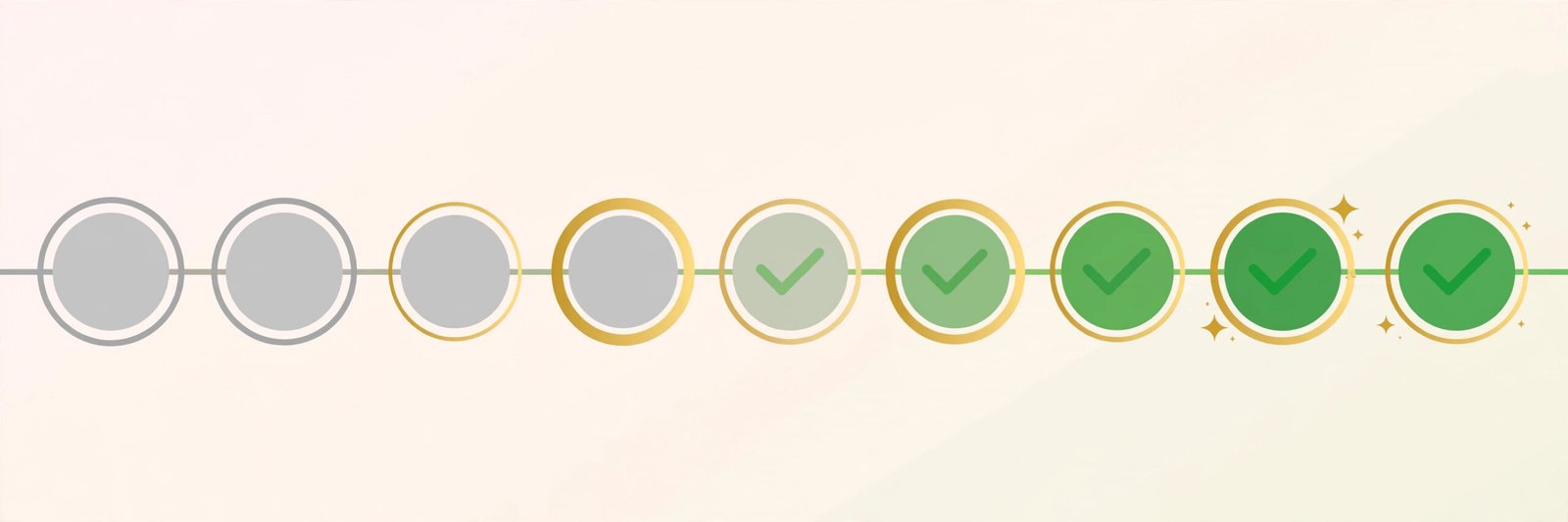
You checked your NSFAS status and got one word back — “Validation”, “Evaluation”, “Filtering”… but what does it actually mean? And more importantly: is there anything you need to do? Here are all 9 stages in plain English, in the order your application moves through them.
1 Application Submitted
NSFAS has received your application. Nothing has been verified yet.
Your move: keep your reference number safe — you’ll need it for every follow-up.
2 Filtering
NSFAS is checking that your application is complete — all required documents attached, form fully filled in.
Your move: watch for document requests. A missing or blurry upload stalls you right here.
3 Validation
Your identity and household details are being verified against official records (Home Affairs, and income data).
Your move: make sure your name spelling, ID number and household income exactly match your official documents. Mismatches are the #1 reason applications get stuck here.
4 Evaluation
NSFAS is assessing whether you meet the financial eligibility rules (household income R350,000/year or less; R600,000 for students with disabilities; SASSA recipients auto-qualify).
Your move: wait — this is the slowest stage. It can take weeks.
5 Funding Eligibility
Good news: you qualify financially. Final administrative checks are still pending.
Your move: almost there — just keep an eye on your status.
6 Awaiting Academic Results
NSFAS is waiting on your academic results (e.g. matric results for first-time applicants) before finalising.
Your move: nothing to do — but make sure your institution will release your results to NSFAS.
7 Awaiting Registration
You’re through NSFAS’s checks — now they’re waiting for your university or TVET college to confirm your registration.
Your move: contact your institution’s financial aid office if registration is delayed; NSFAS can’t pay until the institution confirms you.
8 Provisionally Funded
You’re funded in principle — final confirmation is pending (usually registration confirmation).
Your move: nearly done. Complete your registration as soon as your institution opens it.
9 Approved for Funding 🎉
You’re funded. Allowances will follow once your registration data is verified.
Your move: watch for your first allowance payment and keep your banking details updated on myNSFAS.
What about “Declined”?
If your status shows declined, the portal states the reason. Common reasons: household income above the threshold, incomplete documents, or not meeting academic requirements. You can appeal — for the 2027 cycle the appeal window is 10–24 December 2026, with appeal outcomes published by 9 January 2027. Deadlines are strict: miss the window and the decision stands.
Never lose track of a status change again.
Log all 9 stages with dates, tick off documents and set reminders — free, no sign-up, in your browser.
Open the free tracker →Quick answers
How long does each NSFAS stage take?
There’s no fixed timetable — Filtering and Validation can take days to weeks; Evaluation is usually the longest. For the 2027 cycle, NSFAS aims to conclude funding decisions by 30 November 2026.
My status went backwards (e.g. from Evaluation to Validation). Is that bad?
Not necessarily — it usually means a verifier flagged something for re-checking (often a document). Check your myNSFAS messages for a document request.
Can I speed up my application?
Honestly, no — but you can avoid slowing it down: upload clear documents, keep details consistent with your ID, and respond to any NSFAS request within days.